
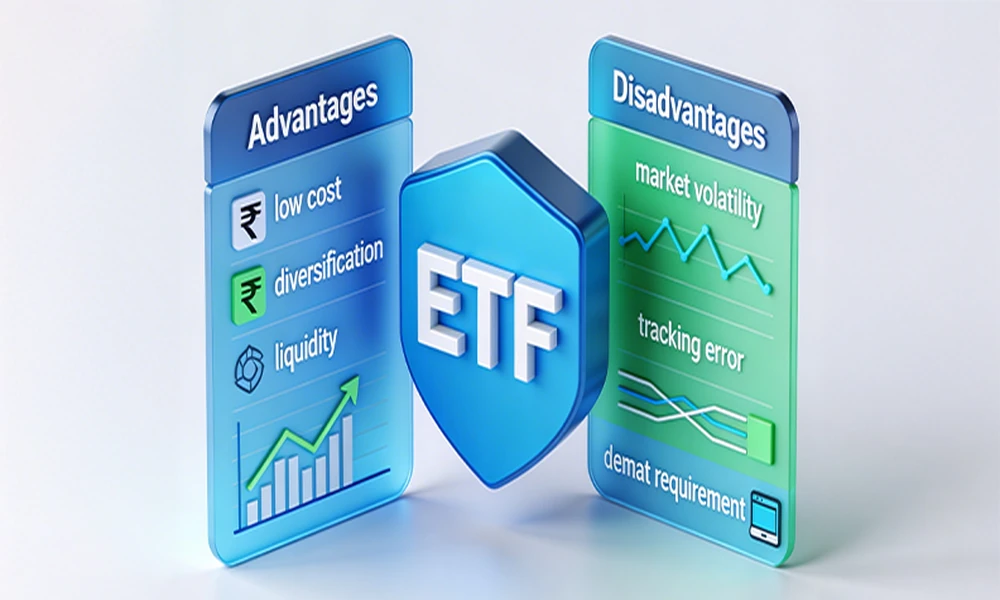
An Etf Broker provides the account and trading platform investors use to buy and sell exchange-traded funds. ETFs may offer exposure to broad indices, sectors, commodities, bonds, international markets, or specific investment factors through one listed instrument.
Although the product structure may appear simple, the choice of platform can affect transaction costs, order execution, portfolio records, market data, and account security. A low brokerage rate alone does not confirm that a provider is suitable.
Investors should compare the complete service, including ETF availability, bid-ask information, limit-order support, depository charges, research tools, tax statements, and customer assistance. The following comparison guide explains the main areas to review.
Begin With the Broker’s Legal and Operational Standing
The first step is to verify the legal and operational details of the provider.
Users should check:
- Legal business name
- Exchange membership
- Depository association
- Registered office
- Official website
- Customer-support channels
- Complaint escalation process
The name displayed in an application store should match the provider’s official records.
Account registration should be completed only through authorised channels. Unknown links, personal payment requests, and unofficial representatives should be avoided.
Product Range Should Match the Portfolio Plan
Not every platform provides the same range of exchange-traded products.
Users should review whether the application offers access to:
- Broad-market index ETFs
- Sector ETFs
- Bond ETFs
- Gold or commodity ETFs
- International ETFs
- Factor-based ETFs
- Smart-beta products
A larger product list is not automatically better.
The platform should provide the types of exposure required by the investor’s financial plan without encouraging unnecessary product accumulation.
Understand the Benchmark Before Looking at Returns
An ETF follows a defined benchmark, portfolio, or strategy.
The platform should clearly display:
- Index name
- Number of holdings
- Sector allocation
- Largest constituents
- Weighting method
- Rebalancing frequency
- Investment objective
Investors should understand the benchmark before comparing recent returns.
Two ETFs may both be labelled as equity products while carrying very different concentration and volatility levels.
ETF Trading Quality Starts With Liquidity Visibility
ETF liquidity affects how easily units can be bought or sold.
The platform should provide:
- Bid price
- Ask price
- Bid-ask spread
- Trading volume
- Market depth
- Recent transaction data
A narrow spread may support more efficient execution.
A wide spread can increase the effective cost of buying and selling, even when the advertised brokerage is low.
Investors should also consider the liquidity of the securities held within the ETF.
Better Price Control Comes From Clear Limit Orders
A market order attempts to execute at the best available price.
During low-liquidity or volatile periods, the final rate may differ from the displayed quote.
A limit order allows investors to define:
- Maximum buying price
- Minimum selling price
- Desired quantity
- Order validity
The platform should make limit-order entry simple and clearly display pending status.
Price control can be especially useful when the ETF has limited trading activity or a wider spread.
Watch for Premiums and Discounts to Underlying Value
An ETF’s traded price may differ from the estimated value of its underlying portfolio.
The difference may arise because of:
- Demand and supply
- Market timing
- Low trading activity
- Underlying-market closure
- Temporary volatility
The application should provide the available net asset value or indicative portfolio value where applicable.
Investors should avoid placing large orders without checking whether the ETF is trading at a meaningful premium or discount.
Fund Costs Matter Most When the Benchmark Is Similar
The expense ratio is charged within the fund and reduces net returns.
When comparing products that follow the same benchmark, investors should examine:
- Current expense ratio
- Historical cost changes
- Fund size
- Tracking quality
- Replication method
A lower expense ratio may be beneficial over a long period.
However, it should not be considered separately from liquidity, tracking difference, and transaction costs.
The Return Gap Shows How Closely the ETF Follows
Tracking difference shows how far an ETF’s return varies from the benchmark return over a selected period.
The gap may be influenced by:
- Expense ratio
- Cash holdings
- Rebalancing costs
- Taxes
- Corporate actions
- Replication method
A smaller and more consistent difference may indicate efficient fund management.
The platform should make historical tracking information easy to locate.
Comparisons should be made among ETFs following the same or closely related indices.
Consistency of Benchmark Tracking Deserves Its Own Check
Tracking error measures how consistently the fund follows its benchmark.
It focuses on the variability of the return difference rather than only its size.
Investors should review tracking error with tracking difference because:
- One shows the return gap
- The other shows the stability of that gap
A fund with a low expense ratio may still produce weak tracking if its portfolio management is inefficient.
Historical figures provide context but do not guarantee future results.
Add Every Visible and Hidden ETF Expense
ETF transactions may involve several expenses.
Possible costs include:
- Brokerage
- Exchange charges
- Securities transaction tax
- Goods and services tax
- Stamp duty
- Depository charges
- Bid-ask spread
- Fund expense ratio
Frequent small transactions may increase the total cost significantly.
Investors should calculate the likely annual expense according to their contribution amount, holding period, and transaction frequency.
Long-Term Account Fees Can Outweigh Low Brokerage
The account used to hold ETF units may include ongoing charges.
Users should examine:
- Account-opening fee
- Annual maintenance fee
- Debit transaction charges
- Pledge charges
- Transfer costs
- Closure fees
An account promoted as free may still include other recurring or transaction-based expenses.
Long-term investors should consider whether annual charges are reasonable relative to the expected investment size.
ETF Research Should Focus on the Portfolio, Not One Stock
A platform may provide financial summaries, index details, charts, returns, and market commentary.
Investors reviewing Stocks Finance information should distinguish between data relevant to individual companies and information relevant to an ETF portfolio.
An ETF may hold dozens of businesses, so one company announcement may have only a limited effect on the overall product.
Research should focus on benchmark construction, concentration, sector exposure, costs, and tracking quality.
Charts Add Context but Cannot Replace Product Analysis
Charting tools may help investors review:
- Historical prices
- Trading volume
- Premium or discount patterns
- Moving averages
- Volatility
- Support and resistance levels
These features can provide context, but they should not replace product-level analysis.
Long-term ETF investors may benefit more from allocation, tracking, and cost reports than from complex short-term technical indicators.
The platform should allow charts to be used without making the interface difficult to navigate.
Use Alerts to Support Planned ETF Reviews
Useful alerts may include:
- Price thresholds
- Unusual volume
- Spread widening
- Corporate or fund announcements
- Expense-ratio changes
- Benchmark changes
Investors can create separate watchlists for broad-market, sector, bond, international, and commodity products.
Alerts should support planned reviews rather than encourage transactions after every small movement.
Portfolio Reports Should Expose Overlap and Concentration
The platform should provide clear information about:
- Total amount invested
- Current value
- Average purchase cost
- Realised result
- Unrealised result
- Asset allocation
- Sector exposure
- Transaction history
Portfolio reports should help investors identify whether several ETFs provide overlapping exposure.
A diversified-looking portfolio may still depend heavily on the same large companies or sectors.
Recurring ETF Purchases Need Cost and Execution Checks
Some investors prefer to buy ETF units regularly.
The platform may offer scheduled orders or recurring purchase tools.
Users should review:
- Minimum practical contribution
- Order timing
- Brokerage per purchase
- Bid-ask spread
- Failed-order handling
- Available balance reminders
Automation can support consistency, but every completed order should still be checked for price and quantity.
Account Protection Must Cover Funds, Data and Holdings
The platform should protect personal information, funds, and holdings.
Important features may include:
- Two-factor authentication
- Biometric login
- Device approval
- Login alerts
- Transaction notifications
- Session timeout
- Secure password recovery
One-time codes, passwords, and remote-access permissions should never be shared.
Applications should be installed only from official sources.
Deposits and Withdrawals Should Follow Verified Channels
Adding and withdrawing money should be straightforward.
Users should check:
- Linked-bank requirements
- Supported payment methods
- Transfer limits
- Withdrawal timing
- Failed-payment handling
- Applicable charges
Money should be transferred only through verified channels shown inside the application.
Unexpected payment instructions sent through private messages should be confirmed through official support.
Reliable Statements Support Tax and Portfolio Tracking
A suitable platform should provide downloadable:
- Contract notes
- Ledger statements
- Holding statements
- Profit and loss reports
- Capital-gain summaries
- Charge details
- Transaction history
These records support tax filing, portfolio review, and account reconciliation.
Investors should store copies securely rather than depend entirely on continued platform access.
Support Quality Becomes Visible When Transactions Fail
Support quality becomes important when users experience order, payment, account, or statement issues.
Useful options may include:
- In-app tickets
- Email support
- Telephone assistance
- Help-centre guides
- Complaint tracking
- Escalation contacts
Users should check whether support is available during market hours.
Reference numbers, screenshots, emails, and official statements should be retained until the matter is resolved.
A Suitable Broker Should Make Transfers and Closure Clear
Investors may later decide to transfer holdings or close the account.
The provider should clearly explain:
- Securities transfer procedure
- Applicable fees
- Required documents
- Pending-obligation checks
- Closure timeline
- Statement access after closure
A user should not remain with an unsuitable provider only because the transfer process appears complicated.
Stable Execution Matters When ETF Prices Are Moving
ETF orders depend on access to accurate market prices and stable execution tools.
Users should assess:
- Login reliability
- Price-update speed
- Order-screen responsiveness
- Holding accuracy
- Browser access
- Outage communication
- Alternative support
No digital service can guarantee uninterrupted access.
The provider should offer clear guidance during technical issues.
Different ETF Names Can Still Create the Same Exposure
Holding several ETFs can create duplication.
Investors should compare:
- Common constituents
- Sector weights
- Market-cap exposure
- Benchmark similarity
- Country exposure
Two different fund names may still track closely related indices.
Each ETF should add a distinct role, such as broad equity, debt, gold, or international diversification.
Broker Selection Should Reflect How the Investor Operates
A long-term investor may prioritise:
- Low account costs
- Stable holding records
- Tax statements
- Regular investment tools
- Portfolio allocation reports
A more active user may prioritise:
- Live market depth
- Fast order entry
- Advanced charts
- Price alerts
- Spread visibility
The suitable provider depends on how frequently the investor plans to transact and which information is required.
Keep Direct Stock Trading Separate From ETF Allocation
Before using the same account for Stocks Trading, investors should define separate capital limits, records, and risk rules for direct-share activity and ETF-based portfolio allocation.
Direct company positions may require business-specific research, while ETF decisions focus more on benchmark quality, concentration, tracking, and cost.
Keeping these activities separate can make performance and risk easier to assess.
Conclusion
Selecting an Etf Broker requires more than comparing brokerage rates.
Investors should review ETF availability, underlying-index information, liquidity tools, limit-order support, spreads, tracking data, account charges, reports, security, and customer service. The platform should also help users identify overlap and understand the complete cost of each transaction.
A suitable provider makes product research, order verification, portfolio monitoring, and long-term record keeping easier without encouraging unnecessary activity.
Frequently Asked Questions
1. Why is ETF liquidity important?
It affects execution speed, bid-ask spreads, and the ability to buy or sell units at a reasonable price.
2. Is the ETF with the lowest expense ratio always preferable?
No. Investors should also review tracking quality, liquidity, spreads, fund size, and benchmark suitability.
3. Why can an ETF trade above or below its underlying value?
Demand, supply, timing differences, volatility, and limited trading activity can create temporary premiums or discounts.
4. Should investors use market orders for every ETF?
No. Limit orders may provide better price control, particularly when liquidity is limited or spreads are wide.
5. What records should ETF investors preserve?
They should retain contract notes, holding statements, ledger reports, capital-gain summaries, and charge details.